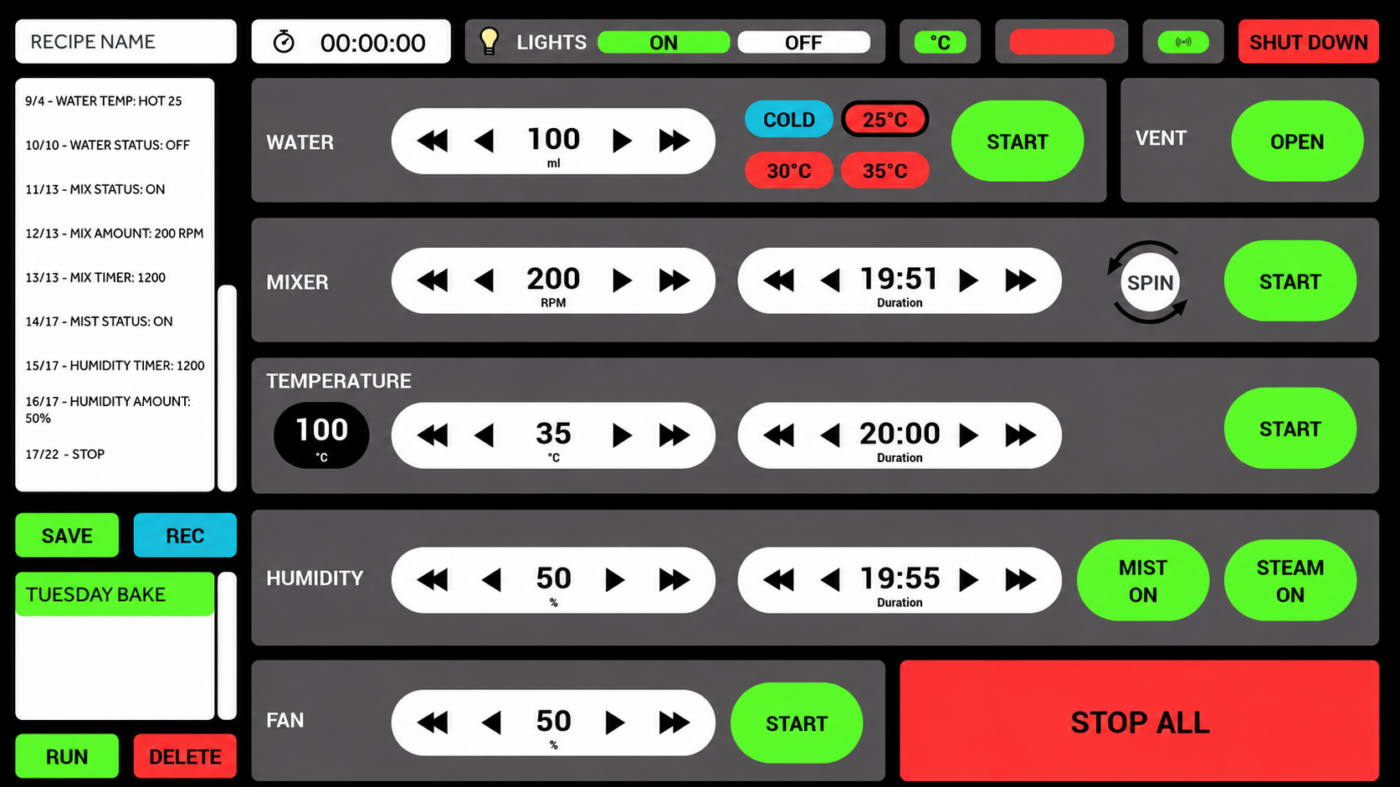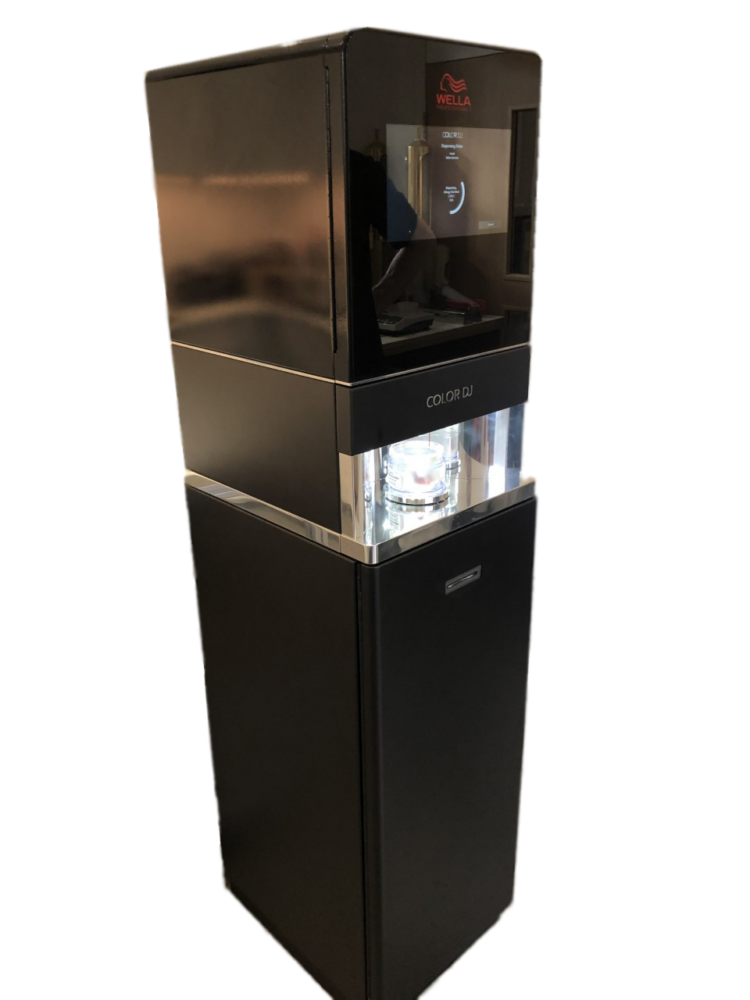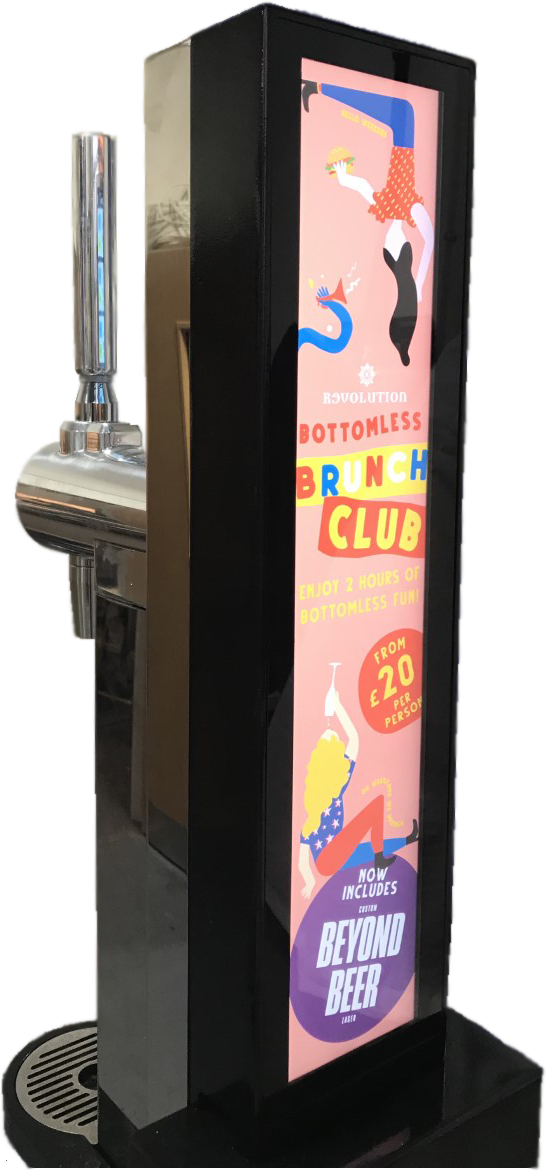
Original project photograph showing the dispensing hardware and customer-facing display.
From the project
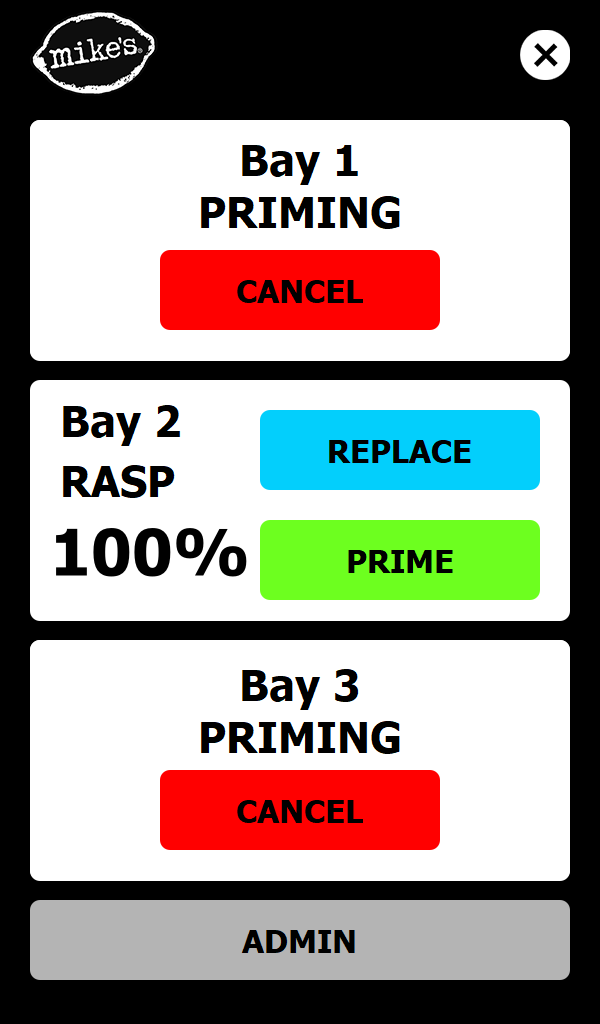
A connected dispensing system
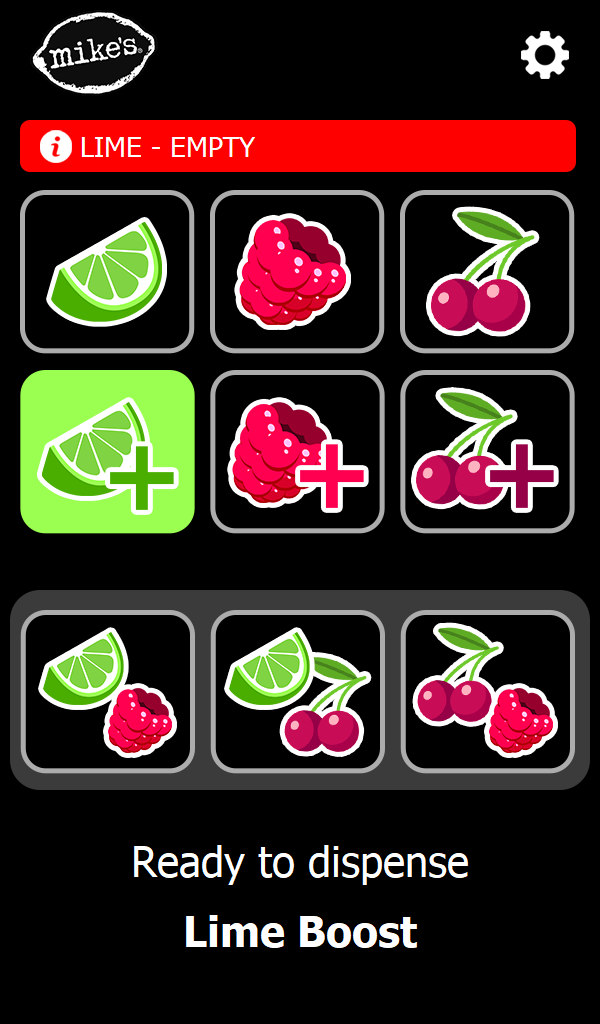
This project combined precision flavour dispensing, two embedded displays, mobile ordering and a central analytics platform. The machine connected to a conventional in-line bar system and used three ingredient bays to micro-dose flavours into a base drink. Operators could select individual flavours, stronger flavour settings or combinations, with different configurations for beer and hard seltzer.
My software work covered the embedded Qt application, the Android and iOS ordering application, the server API, the database and the browser-based content management system. It also included the Linux services and communication between those components.
Embedded application and machine communication
A Debian-based Linux single-board computer ran a multithreaded Qt/C++ interface, with XML layouts, Qt stylesheets and MySQL integration. It drove an 800 × 480 operator touchscreen and a separate 1920 × 360 customer-facing display. The touchscreen handled the operating workflow while the larger screen played an idle video loop and changed its content to match the dispense selection.
A bespoke bidirectional serial protocol connected the Linux computer to an ATmega2560 microcontroller responsible for the hardware and drivers. The machine combined motors, pumps and flow sensors to control volumetric micro-dosing and monitor the three flavour packs. D-Bus and system-pipe scripting coordinated video playback, and systemd services handled application and server startup.
- Pack levels were shown as percentages and bars, with low-pack warnings on the flavour-selection screen.
- Replacement and priming workflows supported individual bays, with an optional guided installation walkthrough.
- A passcode-protected engineering panel exposed product mode, selection options, hostname and IP information.
- INI configuration files retained the operating mode, available selections and physical location.
- The device downloaded new media automatically and could receive an override from the central CMS to change the active video.
Connectivity, telemetry and server services
An industrial 4G router connected to the embedded computer over Ethernet, using an international machine-to-machine data plan. Dispense records were sent to a Linux dedicated server over an encrypted TCP connection and stored in MySQL. The records included venue and location, order type, flavour and base-liquid volumes in millilitres, and dispense duration in milliseconds.
I developed a C-based server API and the database integration. The implementation used TLS-protected API and database connections, HTTPS for the website and SSH for server administration. The original web deployment ran on CentOS 7; this describes the project's implementation at the time.
Analytics and remote media management
The bespoke CMS used PHP, MySQL, JavaScript, jQuery, AJAX, HTML and CSS. An authenticated administrator could see connected machines on an OpenStreetMap-based view, select a venue and inspect its activity. Selecting a dispense record moved the map to the associated location and filtered the analytics.
- Live order notifications and a searchable dispense history with filters.
- Per-location graphs showing flavour popularity and other dispensing statistics.
- Order records with timestamps, serve duration, volumes and location details.
- Media uploads, global video activation and manual selection of the content sent to machines.
- Location-specific analysis alongside the wider fleet view.
An additional configuration integrated a third-party presence-sensing system. Its anonymised audience summaries and movement information were presented in the CMS to support engagement analysis and changes to promotional media. The presence-sensing technology came from the integration partner.
Mobile ordering and the evolution of the workflow
The first version included a Qt/C++ and QML application for Android and iOS. Customers selected a drink configuration, including alcohol content, and the order appeared on the operator touchscreen for staff to dispense. The early connection used Bluetooth 5 with RFCOMM. I built a Python Bluetooth agent using the D-Bus API to handle connecting, trusting and pairing.
Version 1.1 moved the ordering path to a bespoke bidirectional TCP/IP connection through the remote server. A TCP-to-MySQL API stored mobile orders in the database, from which the machine retrieved its order list. The bartender selected the order on the embedded interface.
Later, the workflow was simplified: staff selected flavours directly on the touchscreen, including single flavours, boosts and combinations. This removed the need for the customer to place the order through the mobile application. The project therefore included both the development of the connected ordering system and the subsequent move to a more direct operator interaction.