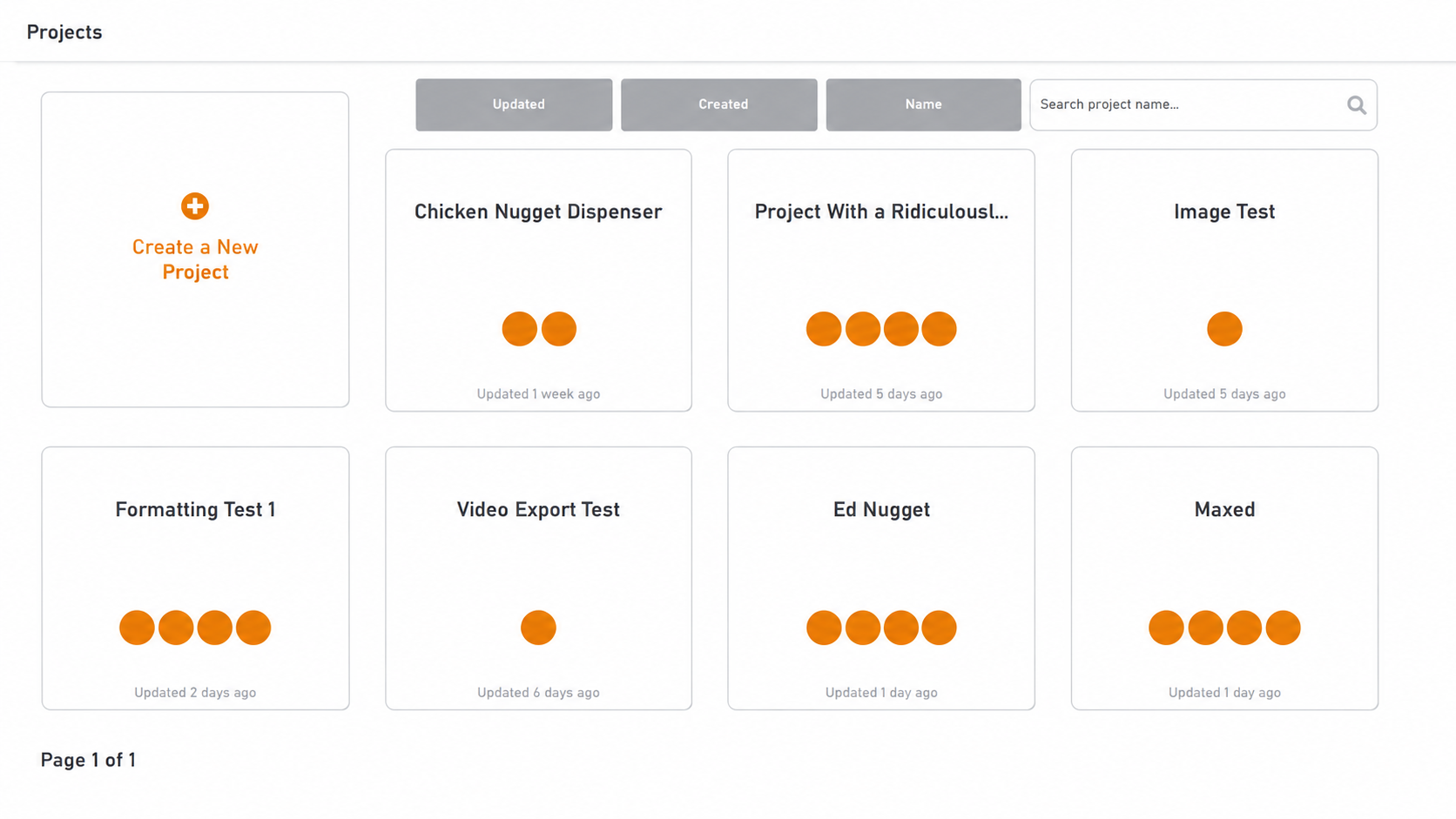
Privacy-edited interface image based on the original project screenshot; employer branding and user identifiers removed.
Project management with an auditable history
I developed a bespoke web application to support project management and an ISO-related audit process. It combined project descriptions, objectives, deliverables, participants and a recorded history of changes. The aim was to make the record of a project's decisions and progress available both during day-to-day work and when preparing for an audit.
My contribution covered the browser interface, PHP backend, MySQL database, document generation and deployment on an Ubuntu dedicated server running Apache. JavaScript, jQuery and AJAX supported the interactive front end.
Collaborative project workflow
Managers could create projects and invite participants. Members of a project could update its description, deliverables and objectives. Each change recorded who made it and when, and email notifications kept the people involved informed.
Projects could be archived while retaining their data and history. Project and user-engagement analytics provided an overview of activity beyond the individual project pages.
- Formatted content supported rich text, embedded images using base64 encoding and embedded video through iframes.
- Content tags were sanitised as part of handling formatted submissions.
- Separate interfaces supported ordinary users and project managers, with a dedicated administration area for system management.
Accounts, roles and project visibility
Registration required approval, and account records used hashed passwords. A role system distinguished users, managers and administrators: managers could create projects, administrators had full system access, and users worked within their permitted projects. Sensitive projects could be hidden from anyone who had not been invited.
The application also included email-based multi-factor authentication, CAPTCHA and IP allowlisting to restrict access to approved locations. Controls addressed cross-site request forgery, brute-force attempts and SQL injection, alongside measures intended to limit abusive traffic. These were implementation features of the system, rather than a claim that any web application is immune to attack.
PDF exports and audit preparation
Dompdf generated PDF documents from the MySQL-backed project records. Users could export a single project or a wider set of projects, including the timeline of changes, timestamps, authors and supporting information. This made it possible to take a coherent audit record out of the application without manually assembling it from individual screens.
Email and PDF templates were configurable so the output could be maintained centrally. The application supported an organisation's audit process; it was not itself presented as an independently certified product.
Administration and activity records
The administration area included account and permission management, project archives, configurable templates, analytics and a settings panel for maintaining the system. A system audit view exposed user timelines, feature usage and recorded activity, including IP logging. HTTPS/TLS protected the web service.
The result brought the operational workflow and its reporting together: users could collaborate on a project while managers and administrators retained the information needed to review access, follow changes and prepare records for audit.