Surface detail that exists in the mesh
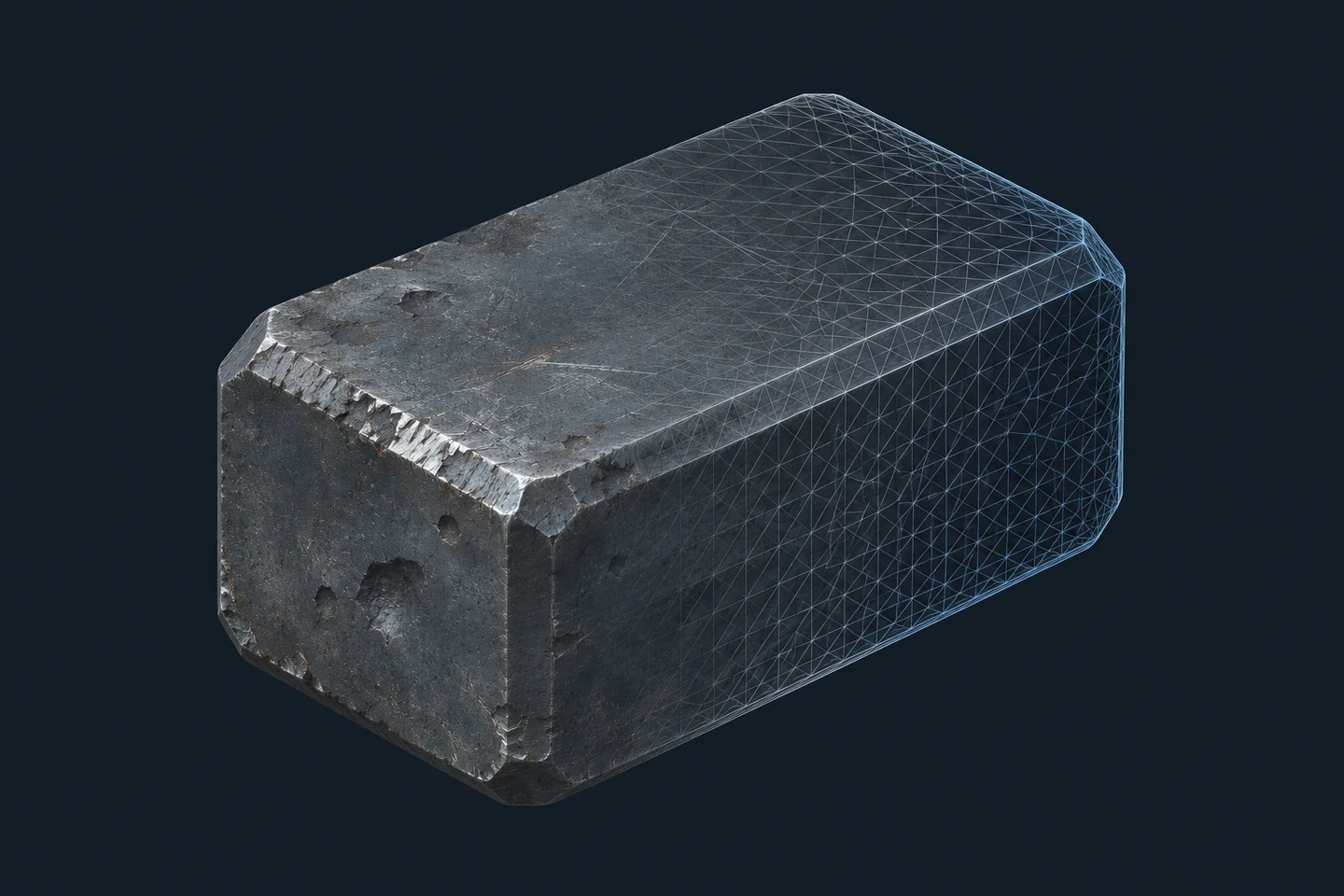
3D Metaliser Tools creates physical surface damage for 3D printing. Dents, gouges, scratches and pitting are written into STL geometry, so the result can be sliced and printed rather than remaining a render material.
Two complementary workflows
- 3dMetaliser.py detects connected flat patches on an existing STL, refines the eligible geometry and applies procedural damage.
- 3dMetaliserBlock.py produces a separate negative damage stamp, ready to position and subtract in a mesh editor or CAD workflow.
- Both tools offer an interactive wizard, command-line parameters, presets and repeatable random seeds.
Keeping the useful geometry
The mesh modifier can leave small details, narrow strips and the build-plate bottom untouched. Edge fading limits damage near patch boundaries, and a triangle budget controls refinement cost. Optional JSON reports record the settings and mesh statistics. The Python implementation uses NumPy, trimesh, Shapely and rtree; the standalone stamp generator uses the standard library.
Choosing a result you can print
Surface depth and feature size need to suit the model and printer. Thin-wall protection is a best-effort pre-check, not a final mesh guarantee. Keep the original STL and inspect the generated mesh in a slicer before printing. The blueprint cover is illustrative artwork, not a verified example output.